As an Amazon Associate, we earn from qualifying purchases. Some links may be affiliate links at no extra cost to you. Although our opinions are based on curated research, we haven't used these products. Articles generated with AI.

What Is The Difference Between Smoke And Heat Detectors?

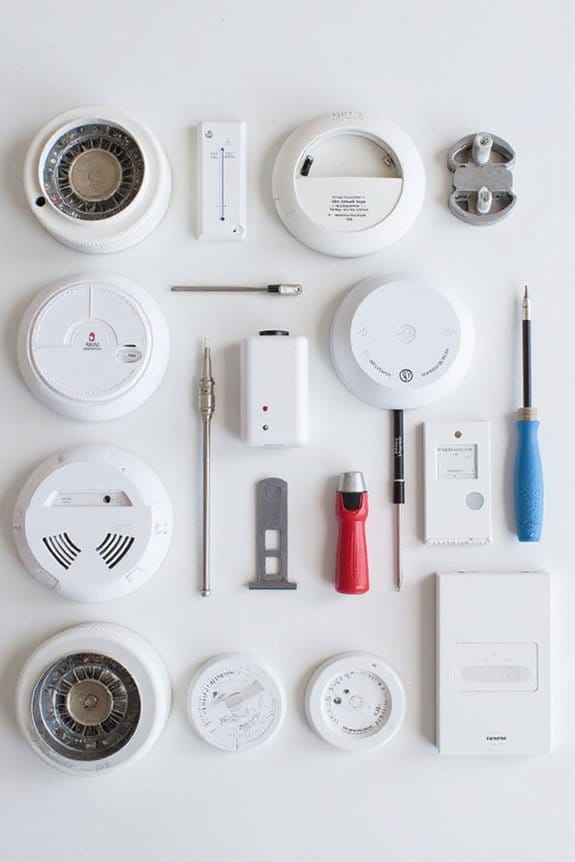
I’m glad you asked! The main difference between smoke and heat detectors is how they sense danger. 1) Smoke detectors sense smoke particles and sound the alarm quickly. They’re great for catching fast-flaming fires. 2) Heat detectors, on the other hand, activate at specific temperatures and are less sensitive, meaning slower responses. They’re perfect for environments where dust or steam can set off false alarms. Want to know more about their functions and best placements? Let’s keep going!
Key Takeaways
- Detection Method: Smoke detectors sense smoke particles, while heat detectors respond to changes in temperature or set temperature thresholds.
- Response Speed: Smoke detectors activate quickly with smoke presence, whereas heat detectors may lag due to gradual temperature increases.
- Fire Type Suitability: Smoke detectors are better for detecting fast-flaming and smoldering fires; heat detectors are suitable for kitchens and dusty areas.
- False Alarms: Smoke detectors are prone to false alarms from dust or steam, while heat detectors are less susceptible to such triggers.
- Installation Placement: Smoke detectors should be in living areas and hallways, whereas heat detectors are best mounted on ceilings or walls in specific environments.
Detection Mechanism
You may be interested



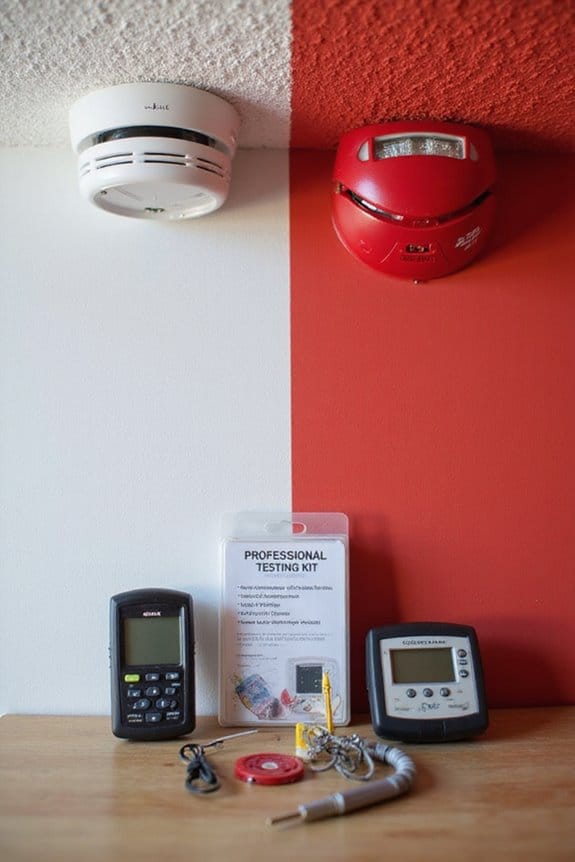
When it comes to fire safety, understanding the detection mechanisms of smoke and heat detectors can make a big difference. Let me break down the detection methods for you:
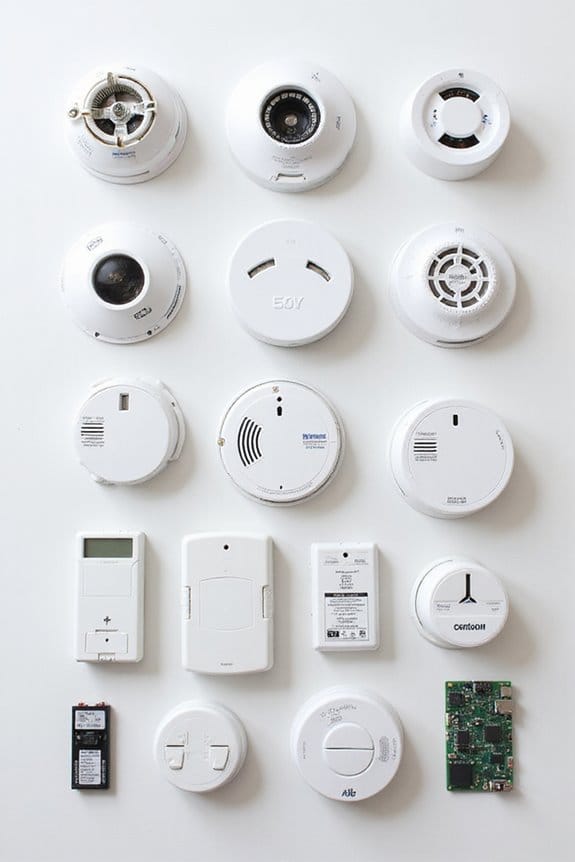
- Ionization Smoke Detectors: These use a tiny bit of radioactive material. When smoke enters, it disrupts the electric current, triggering the alarm. They’re great for fast-flaming fires.
- Photoelectric Smoke Detectors: They rely on light. Smoke scatters an LED beam, and when enough light hits the sensor, the alarm goes off. These are better for smoldering fires.
- Heat Detectors: Unlike smoke detectors, they respond to temperature changes. They’re not sensitive to smoke, making them ideal for dusty areas. Choosing the right detector involves understanding detection technology types to ensure comprehensive safety in your home.
Knowing these sensor technologies can help you choose the right detector for your home. It’s all about staying safe, after all!
Recommended Products

UL 217 10th Ed. Certified & Red Dot Awarded — Meets the UL 217 10th Edition safety standard – the newest and most rigorous smoke alarm requirement in North America. Its compact, low profile, micro purpose-built design earned the Red Dot Design Award in Germany, combining dependable protection with a clean, modern look that fits seamlessly into today’s homes.

SMOKE DETECTION: Model 10SDR detects smoke with over 25% faster smoke detection*; sounds a loud 85-decibel alarm with red LED light for clear visual warnings; compact design suitable for homes

SMOKE DETECTION: Model 20SD10 detects smoke over 25% faster*; sounds a loud 85-decibel alarm with red LED light for clear visual warnings; suitable for homes
Purpose and Functionality
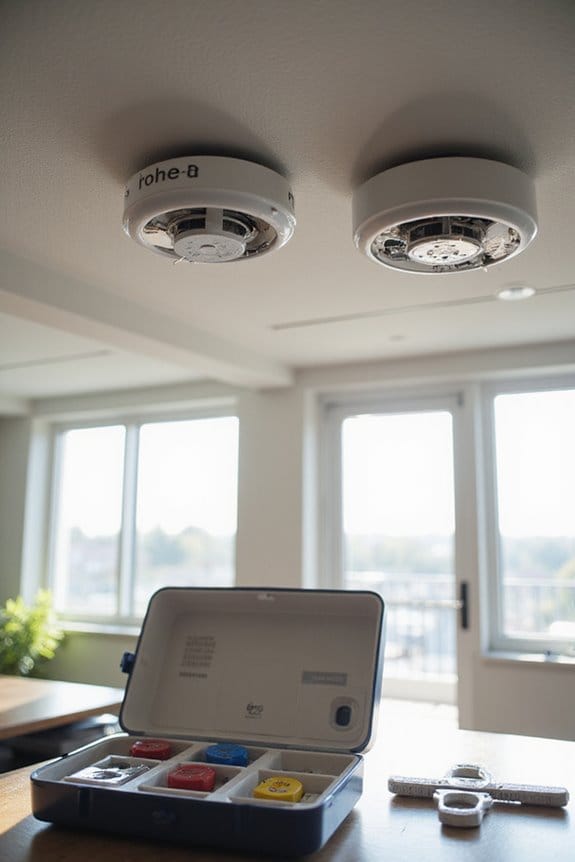
Understanding the purpose and functionality of smoke and heat detectors is vital for any safety-conscious individual. Here’s a quick breakdown:
- Smoke Detectors: They sense smoke particles to provide an early warning of fire. This is critical for escape and survival. Installation guidelines recommend placing them in common areas and bedrooms. Regular maintenance requirements include testing monthly and replacing batteries yearly. Additionally, advanced photoelectric sensors allow smoke detectors to respond more quickly to slow-burning fires, enhancing safety.
- Heat Detectors: These respond to rising temperatures rather than smoke, making them ideal for kitchens or dusty places. They activate when temperatures exceed a set point. For installation, make sure they’re positioned correctly to avoid false alarms. Maintenance involves checking functionality annually.
Combining both types enhances safety, as each serves specific environments effectively. Stay safe, folks!
Recommended Products

First Alert's Precision Detection advanced sensing technology complies with new industry standards to reduce cooking nuisance alarms and provides early warning in the event of a home fire emergency

Heat detector alerts to temperatures rising above 135⁰ Fahrenheit & sounds an 85-decibel alarm to help protect your family

First Alert's Precision Detection advanced sensing technology complies with new industry standards to reduce cooking nuisance alarms and provides early warning in the event of a home fire emergency.
Sensitivity and False Alarms
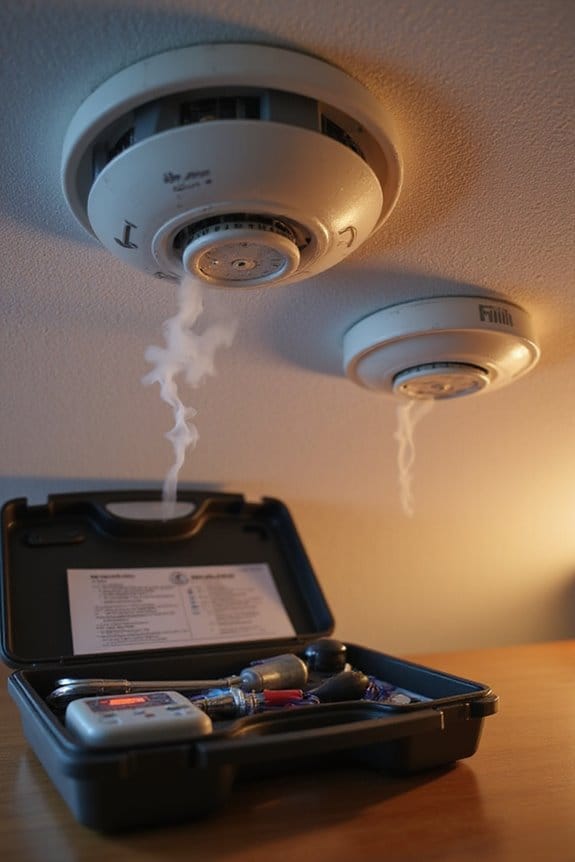
While you might think all fire detectors are created equal, the sensitivity and potential for false alarms can vary quite a bit between smoke and heat detectors. Here’s a quick breakdown:
- Sensitivity Levels: Smoke detectors are highly sensitive and can detect small smoke particles early on. In contrast, heat detectors only activate when the temperature hits a specific point.
- False Alarm Causes: Smoke detectors often face false alarms from dust, steam, or cooking fumes. This can lead to alarm fatigue. Heat detectors, on the other hand, are less prone to such issues since they only react to significant temperature changes.
Recommended Products

Reliable heat detector ideal for use in areas unsuitable for smoke alarm installation


SYSTEM SENSOR 5601P single-circuit, 135¦ f fixed-temp/rate-of-rise no
Placement Considerations
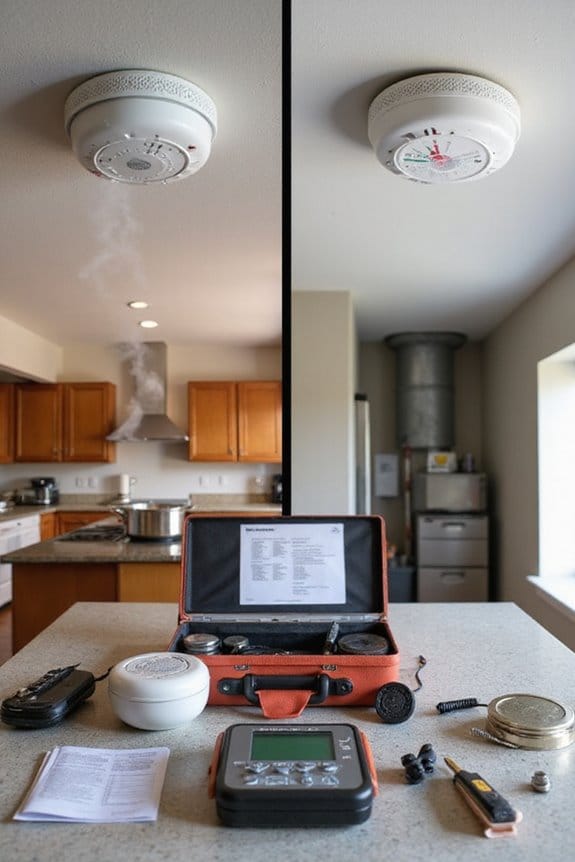
It’s important to think about where you place smoke and heat detectors in your home. Here are a few key placement considerations:
- Mounting Guidelines: Heat detectors should go on ceilings or walls, but avoid extreme temperature areas like attics. Smoke alarms belong in living areas and hallways, helping you escape in time.
- Environmental Factors: Avoid placing smoke detectors near kitchens or bathrooms, where steam and cooking might trigger false alarms.
- Spacing: Make sure detectors cover escape routes and sleeping areas, ensuring safety.
Recommended Products

Please Note: The SC07 is a basic standalone unit. It does not support wireless interconnection, Wi-Fi, or base station connection; for wireless interconnection, search for SC07-W

First Alert's Precision Detection advanced sensing technology complies with new industry standards to reduce cooking nuisance alarms and provides early warning in the event of a home fire emergency.

2-in-1 Protection: The smoke and carbon monoxide detector is equipped with both photoelectric smoke sensor and electrochemical CO sensor that both detect smoke and dangerous CO levels
Response Time and Detection Speed
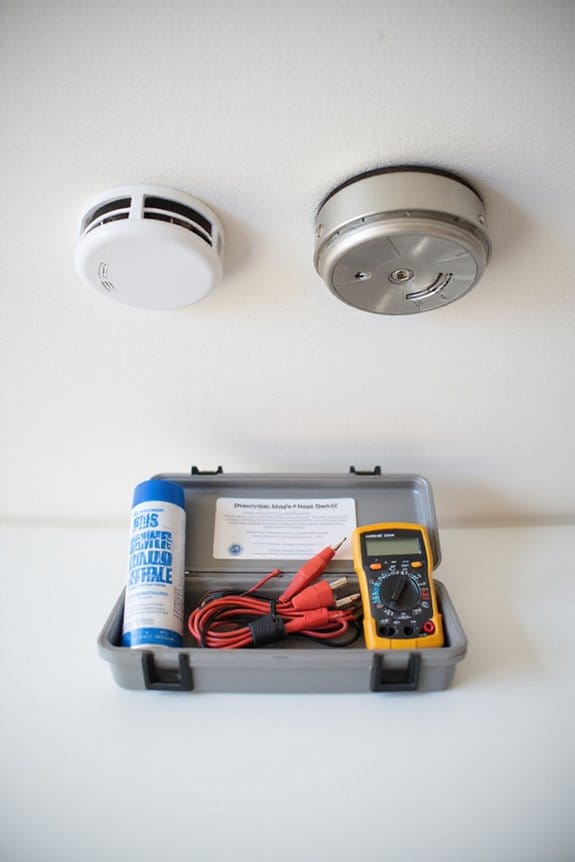
When you’re thinking about fire safety, the response time and detection speed of smoke and heat detectors can be real game-changers. Here’s a quick response time comparison:
- Smoke Detectors: They generally activate faster, detecting combustion particles before major temperature rises. They’re your early warning friends!
- Heat Detectors: These guys wait for a set temperature or a rapid rise, often showing thermal lag, especially in fast-developing fires.
Detection speed factors include the type of fire and environmental conditions. For example, smoke detectors can trigger early in smoldering fires, while heat detectors may lag due to gradual temperature changes. So, if you want quicker alerts, investing in advanced smoke detectors might be your best bet. After all, catching a fire early is always a win!
Technology Types and Operating Principles
Understanding the technology types and operating principles behind smoke and heat detectors is key to making informed decisions about fire safety. Let’s break it down:
- Smoke Detectors:
- Ionization: Uses radioactive material to detect fast-flaming fires.
- Photoelectric: Senses smoke by scattering light, ideal for smoldering fires.
- Combination: Merges both technologies for broader detection.
- Fixed Temperature: Activates at a set temperature.
- Rate-of-Rise: Triggers with rapid temperature increases.
In this technology comparison, smoke detectors are quicker at sensing danger, while heat detectors minimize false alarms. So, if you’re choosing one, think about your environment. For dusty areas, a heat detector might be your best bet. Keep it safe, folks!
Recommended Products

Please Note: SC01 is a basic standalone unit; it does not support wireless interconnection, does not have Wi-Fi, and cannot be used with a base station; for interconnection, search for SC01-W

Please Note: The SC07 is a basic standalone unit. It does not support wireless interconnection, Wi-Fi, or base station connection; for wireless interconnection, search for SC07-W

Please Note: The SC07-W supports wireless interconnection but does not have Wi-Fi
Frequently Asked Questions
How Often Should Smoke and Heat Detectors Be Tested?
I test my smoke detectors annually and inspect them every other year for sensitivity. For heat detectors, I visually check them regularly and perform periodic functionality tests, following the recommended testing frequency for both detector types.
What Is the Lifespan of Smoke and Heat Detectors?
Detecting danger demands diligence! I’ve learned smoke detectors typically expire after 10 years, while heat detectors last around 15. Always check those detector lifespans; knowing expiration dates keeps our homes safer and sounder.
Can Smoke and Heat Detectors Be Interconnected?
Yes, smoke and heat detectors can be interconnected in systems to enhance safety standards. This integration allows alarms to activate simultaneously, improving response times and ensuring thorough coverage across various environments, boosting overall fire safety.
Are There Specific Brands Recommended for Reliability?
When considering brand comparisons for reliability ratings, I’ve found Nest Protect and Honeywell stand out. Their advanced technology and strong reputations offer peace of mind, ensuring effective detection in various environments while minimizing false alarms.
How Do I Maintain Smoke and Heat Detectors?
Maintaining your detectors is like nurturing a trusty friend. I check their placement monthly, guarantee battery replacements happen annually, and give them a gentle clean twice a year for peak performance. They deserve my attention!