As an Amazon Associate, we earn from qualifying purchases. Some links may be affiliate links at no extra cost to you. Although our opinions are based on curated research, we haven't used these products. Articles generated with AI.

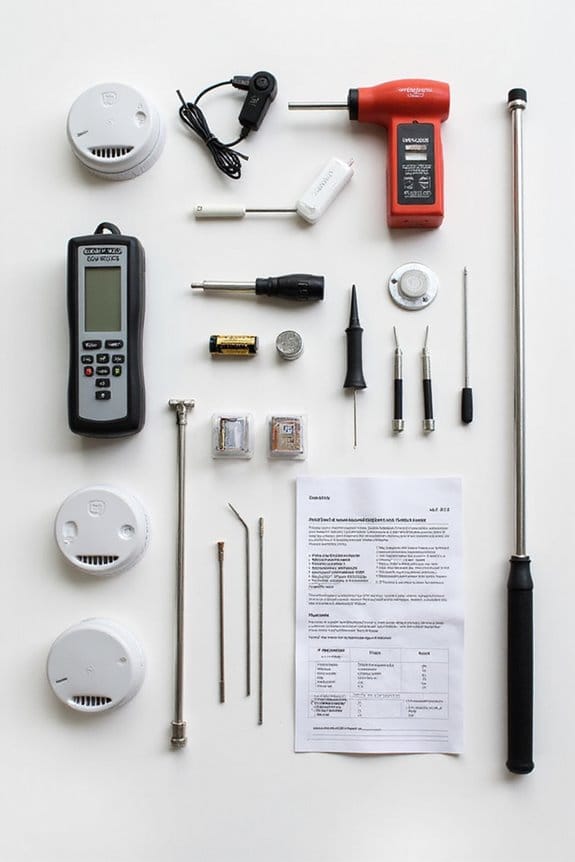
How Often Should Smoke Detectors Be Tested?

It’s essential to test your smoke detectors monthly for ideal safety. You’ll want to schedule semiannual inspections with a licensed technician, and don’t forget annual sensitivity testing—it keeps detectors on their toes! If your detectors pass two consecutive tests, you might extend that testing interval to every five years. Keeping track of all these tests isn’t just smart; it’s regulatory. Stick around a bit longer, and I’ll share some best practices for keeping those detectors in prime shape!
Key Takeaways
- Smoke detectors should be tested monthly to ensure they are functioning correctly and to prevent malfunctions.
- Semiannual inspections by licensed technicians are mandatory for compliance with NFPA 72 regulations.
- Annual sensitivity testing is required within one year of installation to confirm detector performance.
- If two consecutive sensitivity tests pass, testing intervals can be extended to every five years.
- Always maintain records of tests and inspections for compliance and safety tracking.
Monthly Functional Testing
You may be interested
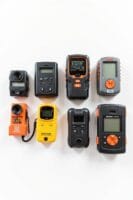
You might be surprised to learn that smoke detectors need a little love every month. Yes, monthly functional testing is essential for ensuring your detectors are up to snuff. Here are some benefits of this testing frequency:
- Early Malfunction Detection: Regular checks help find issues before they become major problems.
- Safety Assurance: You’ll know that your detectors can respond correctly to smoke simulations.
- Compliance: NFPA 72 requires these tests for regulatory adherence—don’t risk fines!
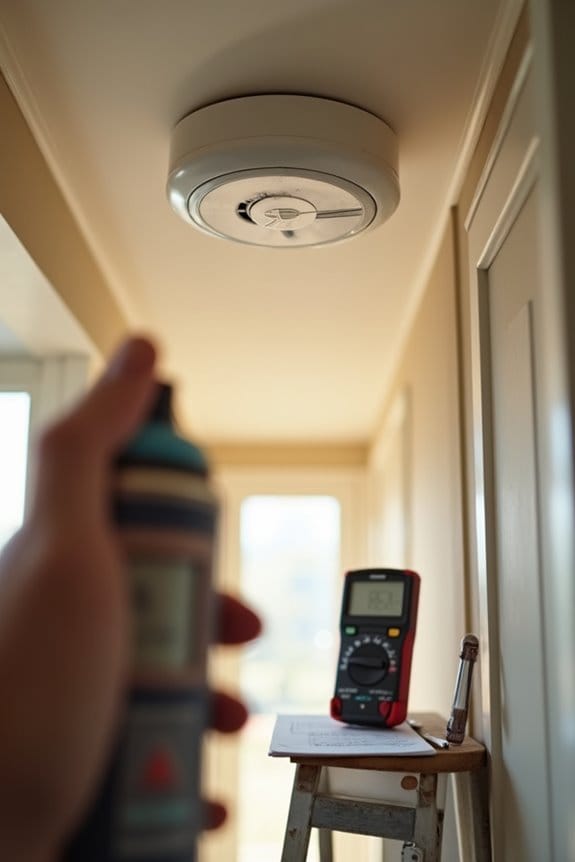
During each test, it’s key to verify alarms, check for damage, and clear any obstructions. Regular maintenance, including monthly testing, ensures reliability and optimal performance. Trust me, staying on top of this can save lives and keep your peace of mind intact. So, set a reminder—your detectors will thank you!
Recommended Products

SDI SOLO809

QUICK RADON HOTSPOT FINDER : Sniff mode measures at 5 minute intervals

The kit comes with a DC powered pump
Semiannual and Biannual Inspections
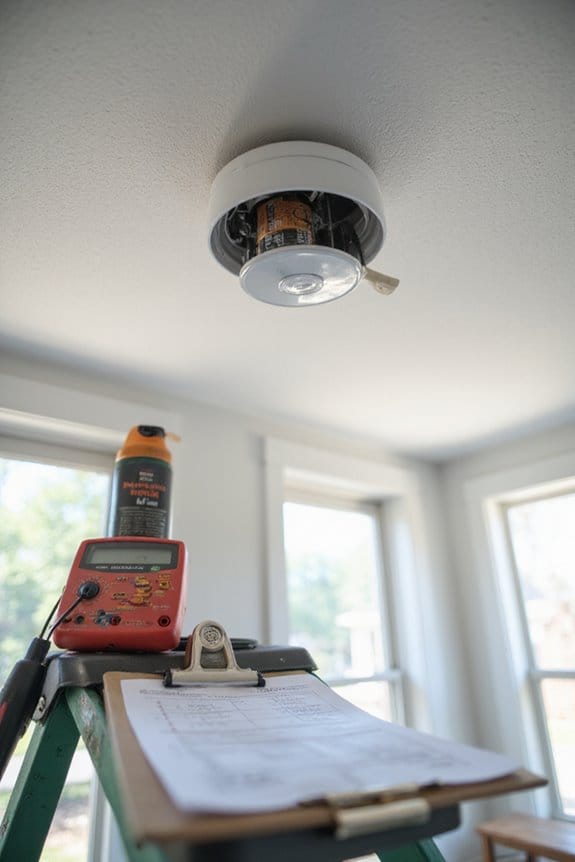
While monthly checks keep your smoke detectors functioning well, there’s more to fire safety than just a quick test each month. That’s where semiannual and biannual inspections come in. Here’s what you should know:
- Inspection Frequency: Semiannual inspections are essential and required by standards like NFPA 72. They go beyond basic testing to guarantee everything runs smoothly.
- Technician Qualifications: Always use licensed fire protection technicians for these checks. They know the ins and outs of what your system needs.
During these inspections, they’ll perform visual checks for damage and confirm that everything’s in working order. Plus, biannual sensitivity testing helps catch any drift in detector performance. Additionally, photoelectric technology is crucial for providing early warnings of smoldering fires, so don’t skip these checks—they’re fundamental for your safety!
Recommended Products

Honeywell XCD Oxygen O2 Sensor 25.0% Vol Sensor Cartridge

120-volt hardwire smoke alarm with photoelectric sensor and battery backup

6 pack of 120-Volt hardwired combination photoelectric smoke and electrochemical Carbon monoxide alarms with battery backup
Annual Sensitivity Testing and Inspection
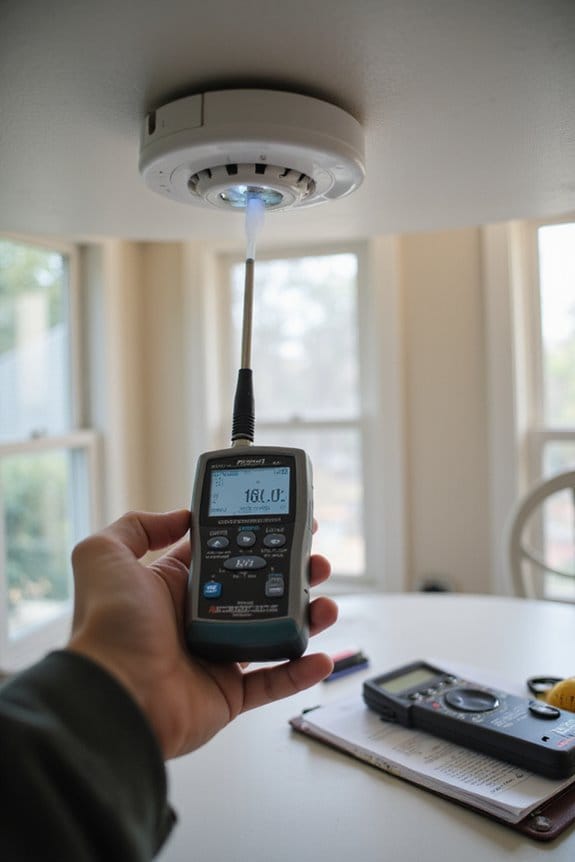
When it comes to annual sensitivity testing and inspection of smoke detectors, it’s vital to stay on top of a few key points.
- Sensitivity Calibration: Testing should happen within a year of installation. This checks if your detector meets the manufacturer’s standards.
- Testing Methods: Use UL-approved equipment or hire a fire safety specialist for accuracy. They’ll guarantee your detectors respond properly to smoke.
- Follow-Up: If your detector passes the first two tests, you might only need to test every five years.
- Replacement Rule: Remember, if you replace a detector, test it again within a year.
Keeping on top of these checks guarantees your smoke detectors are always ready to protect you! Trust me; it’s worth the effort!
Recommended Products


Ionization sensor technology senses invisible fire particles

WORKING PRINCIPLE- This is a professional machine for automotive smoke leak detection, adopted visual smoke test system. By heating up special oil (mineral oil or baby oil) into smoke and blow smoke into sealed pipe system. Quickly locate leaked parts. Reduce the cost of repeating vehicle returns, dramatically reducing diagnostic time.
Extended Testing Intervals Based on Testing Outcomes
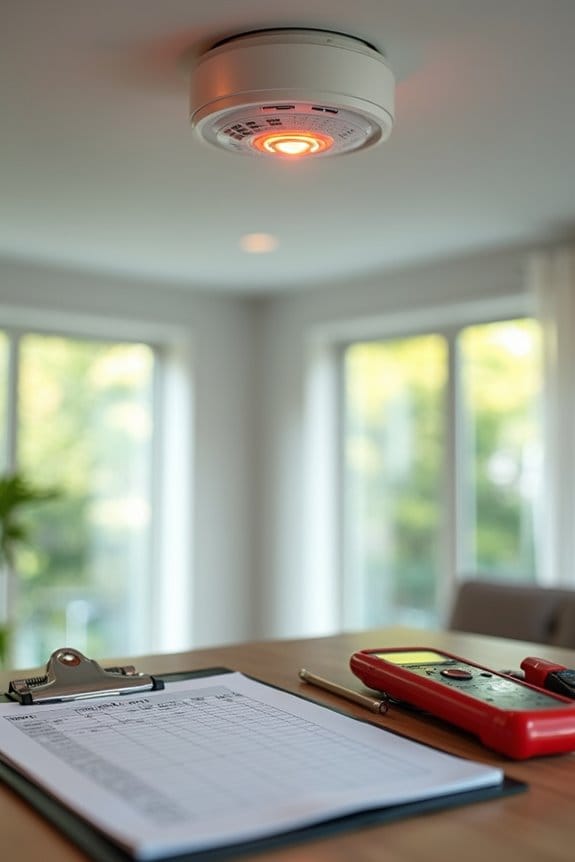
Understanding how often to test smoke detectors can make a big difference in fire safety. If your detectors pass two consecutive sensitivity tests within their listed ranges, you might extend testing intervals up to five years! This is great news—it helps reduce both testing frequency and costs.
- Initial Testing: Test within one year of installation, then every other year.
- Sensitivity Tracking: Keep records of tests; it’s essential for compliance and safety.
- Out-of-Range Alerts: If detectors go out of range, clean or replace them promptly.
Visual Inspections and Component Checks
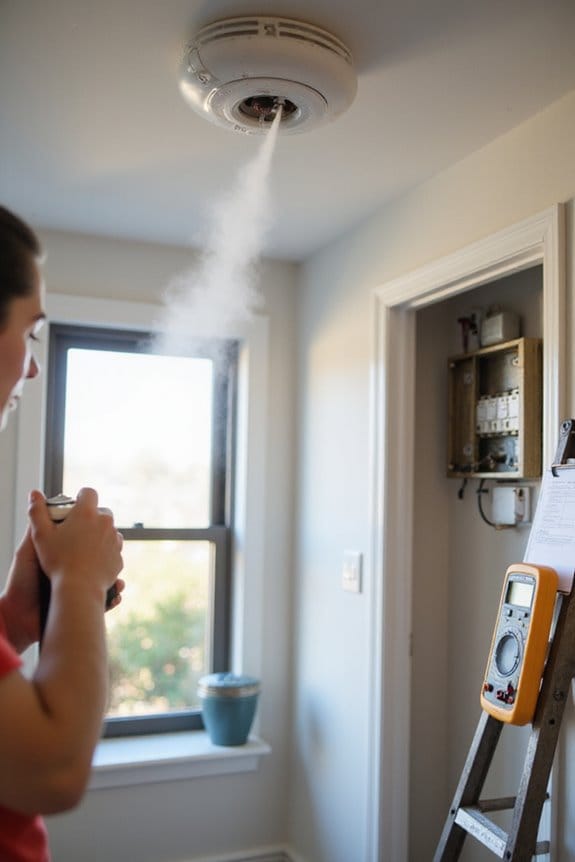
Every six months, you should conduct visual inspections of your smoke detectors to ascertain they’re in tip-top shape. Let’s break down what to look for during these inspections:
- Physical Condition: Check for cracks, corrosion, or dirt on the detector. Any damage can affect performance.
- Mounting Checks: Verify that detectors are securely attached. A loose detector is like a dog off-leash—troublesome!
- Status Indicators: Confirm that the LED light is functioning correctly. If it’s not glowing, it’s time to investigate.
- Component Checks: Inspect wiring and connectors for corrosion or loose connections.
- Environmental Changes: Look for new obstacles around detectors, like furniture or vents, that could block smoke entry.
Keep your smoke detectors clean and clear for the best protection!
Regulatory and Compliance Testing Requirements
After you’ve checked the physical condition of your smoke detectors, it’s time to focus on the regulatory and compliance testing requirements. Here’s what you need to know:
- Testing Frequency: Sensitivity must be checked within a year of installation, then every two years. If all’s well for two tests, you can stretch it to five years!
- Monthly Checks: Functional tests are a must, and they’re usually done by facility staff.
- Qualified Technicians: Semiannual and annual thorough tests should be done by professionals to guarantee compliance. Additionally, it’s essential to ensure that your smoke detectors are UL listed for safety to meet local regulations and standards.
Recommended Products

SDI Solo 823 Kit Smoke Detector Test Kit w/Bag, Heat Tester, Battery Charger

Six complete covers in one kit

10-Year Sealed Battery: Contains a long-life lithium battery that powers the device for its entire 10-year life
Best Practices for Smoke Detector Maintenance
While it might seem like a hassle, keeping your smoke detectors well-maintained is essential for your safety and peace of mind. Here are some best practices I recommend:
- Monthly Testing: Press that test button every month. It’s quick and helps avoid surprises.
- Battery Lifespan: Change batteries annually, or sooner if your alarm chirps. For long-life batteries, replace the unit every 10 years.
- Alarm Positioning: Install alarms in every bedroom and on each level of your home. Place them high up, at least 10 feet from cooking areas to dodge false alarms.
- Regular Cleaning: Dust them off! A vacuum or soft brush works wonders.
Following these tips keeps your detectors in top shape and ready to protect you when it matters most.
Recommended Products

MULTIGAS DETECTION: Equipped to measure Lower Explosive Limit (LEL), Oxygen (O2), Hydrogen Sulfide (H2S) and Carbon Monoxide (CO), designed for virtually no cross-channel interference

Refigerant leak detector and portable monitor

Specifications: 3.6v non-rechargeable D size lithium thionyl chloride battery (Li-SOCL₂). Model: ER34615. Capacity: 19000mAh. Dimension: 33*61.5mm/1.3*2.42 inch. Please Check voltage and type before purchase.
Frequently Asked Questions
What Types of Smoke Detectors Require Different Testing Frequencies?
When I think about smoke detectors, I see that ionization detectors need annual functional tests, while photoelectric detectors follow the same schedule. Each type has unique requirements, ensuring our safety’s always prioritized.
How Do I Know When to Replace My Smoke Detector?
I watch for replacement signs: chirping, false alarms, or discoloration. My detector’s lifespan is essential; when it shows age, I know I need to act. Safety matters, and I won’t take chances with my alarms.
Can I Test My Smoke Detector With Real Smoke?
I wouldn’t recommend using real smoke for testing my smoke detector. Smoke testing methods like the test button are safer and easier. Plus, I always prioritize safety precautions to guarantee my detector functions properly without damage.
Are There Specific Brands Known for Better Reliability?
Like a knight choosing armor, I trust brands like Kidde and First Alert for their reliability ratings. Their solid performance and advanced features give me peace of mind, ensuring my home’s safety isn’t left to chance.
What Should I Do if My Smoke Detector Keeps Beeping?
If my smoke detector keeps making beeping noises, I’d first check for battery issues. Replacing old batteries or ensuring they’re correctly installed usually solves the problem. Regular maintenance helps avoid these annoying disruptions in the future.