As an Amazon Associate, we earn from qualifying purchases. Some links may be affiliate links at no extra cost to you. Although our opinions are based on curated research, we haven't used these products. Articles generated with AI.
What Is Spectral Range In Thermal Testing?

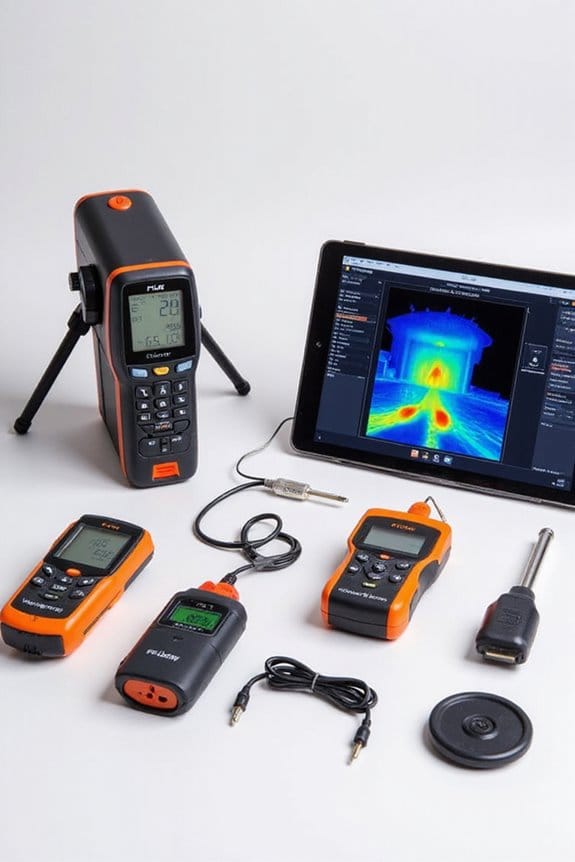
In thermal testing, spectral range is all about the specific wavelengths a device can detect. It’s essential for measuring how materials absorb and emit heat. There are a few common ranges: 1) Near-infrared (0.75-1.4 µm), 2) Short-wave infrared (1.4-3 µm), 3) Mid-wave infrared (3-5 µm), and 4) Long-wave infrared (8-14 µm). Each range has its unique perks, and choosing the right one minimizes temperature reading errors. Stick around, and I’ll share more about its applications and upcoming trends!
Key Takeaways
- Spectral range refers to the specific segment of wavelengths detectable by thermal testing instruments, measured in nanometers or micrometers.
- Different spectral ranges, such as LWIR and MWIR, are tailored for various thermal applications and material properties.
- Proper selection of spectral range minimizes temperature reading errors caused by emissivity variations across materials.
- Calibration with blackbody references is essential for accurate thermal measurements within the chosen spectral range.
- Future advancements in thermal imaging technology will enhance resolution, sensitivity, and integration capabilities across various industries.
Definition of Spectral Range
You may be interested
When we talk about the spectral range, we’re diving into an important part of the electromagnetic spectrum. In essence, the spectral range refers to the specific segment of wavelengths that an instrument can detect. Here’s a quick breakdown:
- Definition: It’s the range of wavelengths, expressed in nanometers (nm) or micrometers (µm), that can be measured.
- Wavelength Limits: Different applications require different wavelength limits. For instance, thermal cameras typically operate between 3 µm and 14 µm.
- Importance: Understanding the spectral range is critical because it directly affects the accuracy of data collected.
Common Spectral Ranges Used in Thermal Cameras
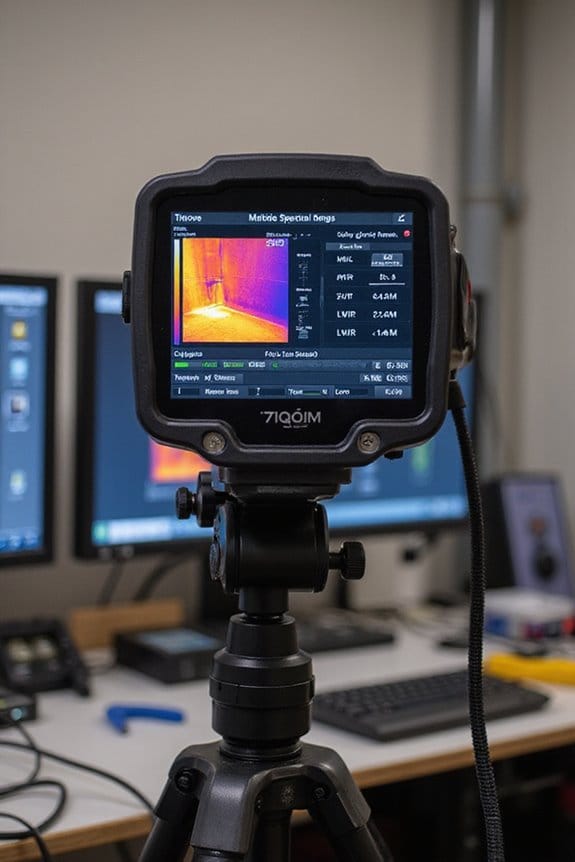
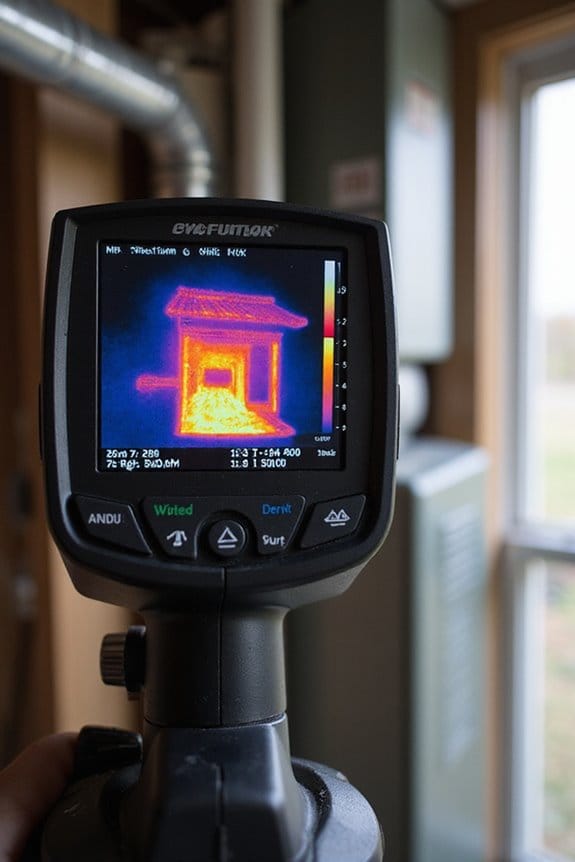
Understanding the common spectral ranges used in thermal cameras can feel like traversing a maze of wavelengths, but it’s essential for effective thermal testing. Here’s a quick breakdown:
- NIR Applications (0.75 – 1.4 µm): Great for high temperatures above 450°C, offering high thermal sensitivity and accuracy.
- SWIR Advantages (1.4 – 3 µm): Important for specialized thermal imaging, especially in multispectral setups, thanks to unique emissivity effects.
- MWIR Limitations (3 – 5 µm): Useful for gas detection but sensitive to atmospheric interference.
- LWIR Features (8 – 14 µm): The most common range, perfect for a wide array of applications, measuring from -50°C to 900°C.
Selecting the right range is key for accurate pyrometry techniques and effective temperature measurement. Additionally, understanding image quality resolution is crucial for interpreting thermal data accurately.
Recommended Products

【Enhanced Thermal Clarity】Start with 128x128 thermal imaging and enhance to 240x240 resolution with TISR technology for greater details. The wide 40°x 30° field of view and a 25Hz refresh rate deliver accurate, smooth thermal images—ideal for detailed inspections in homes and on electrical systems and machinery

【Dual Mode Inspection】Combines conventional thermal imaging (Center/Hot/Cold spot modes) with thermometer mode for flexible temperature analysis. Use full-screen thermal imaging to monitor moving animals, machinery, automotive, or HVAC systems in real time, ensuring continuous observation with no detail loss. When you need exact numbers such as kitchen use, thermometer mode provides quick, point-and-shoot readings with a clear digital display.

【Enhanced Thermal Clarity for Precise Inspections】The RT280 handheld thermal imaging camera features a 2.8-inch 320×240 LCD screen for smooth, detailed thermal visuals. Equipped with TISR technology, it enhances thermal image effective resolution from 120×90 to 240×180, enabling the capture of tiny temperature differences. Its 50°x 38° FOV and 25Hz frame rate deliver clear, smooth images, making it ideal for home inspections, electrical checks, mechanical fault diagnosis, and automotive engine inspections.
Importance of Spectral Range Selection
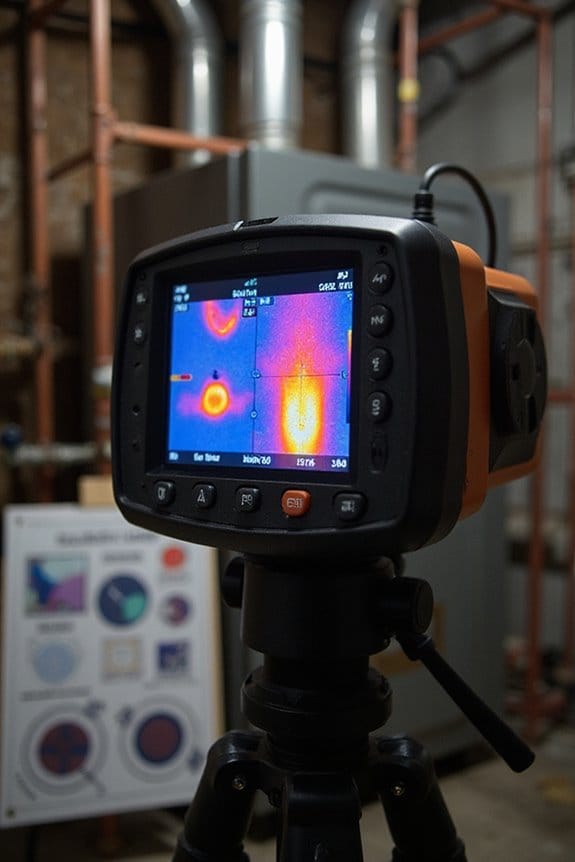
Selecting the right spectral range for thermal testing isn’t just a technical detail; it’s a game-changer for accuracy. Here’s why it matters:
- Minimized Errors: The right spectral range reduces temperature reading errors, especially with high temperatures.
- Emissivity Impact: Mismatched ranges lead to inaccurate readings due to emissivity variations.
- Material Suitability: Different materials emit infrared radiation uniquely, so choosing the right range is essential.
- Sensitivity Boost: A well-matched spectral range enhances thermal camera sensitivity and improves detection of small temperature differences.
Recommended Products

Enhanced Clarity with 240x240 TISR Resolution: Equipped with TISR technology, the H128 infrared camera elevates your thermal imaging clarity from 128x128 to 240x240 resolution. With a thermal sensitivity of 40mk, it captures the slightest temperature differences. A frame rate of 25Hz ensures smooth, stutter-free imagery, providing you with a silky-smooth experience during inspections.

Super Resolution Enhancement: The Flagfront YXI96 thermal camera is equipped with 240x240 super-resolution imaging technology, providing clearer images and capturing more details; A high frame refresh rate of 25Hz ensures a smooth inspection experience
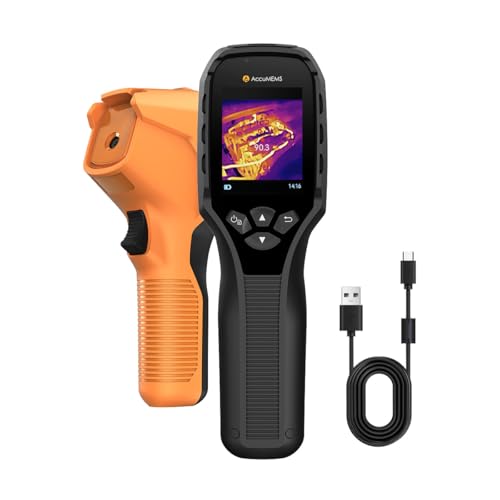
【Dual Mode Inspection】Combines thermal imaging with Center/Hot/Cold spot modes for real-time visual temperature display, and integrates thermometer mode for fast point-and-shoot readings with precise digital output. Full-screen thermal imaging enables continuous monitoring of moving targets,ensuring stable observation without loss of detail during dynamic inspections.
Measurement and Calibration Considerations
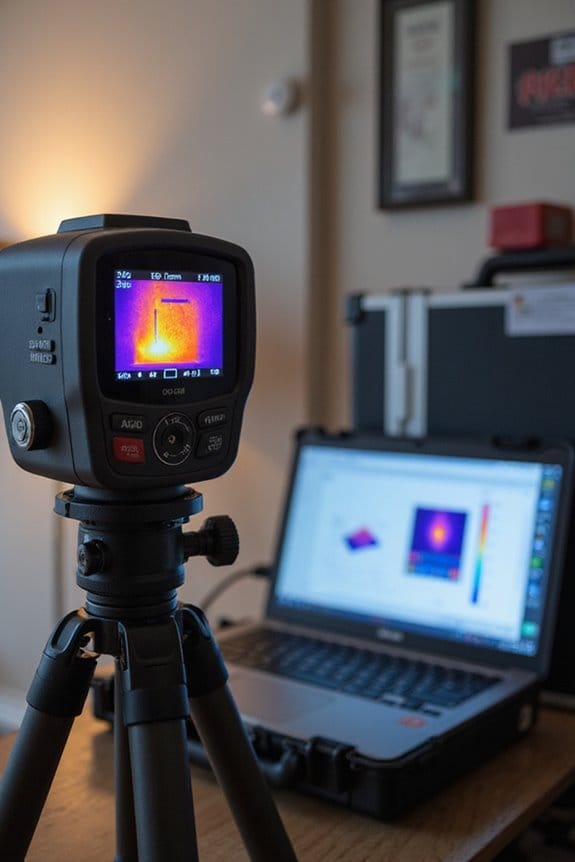
While you might think that measuring thermal properties is straightforward, there’s a lot that goes into ensuring accuracy and reliability in your results. Here are some key considerations:
- Calibration Standards: Use blackbody references for known emissivity; these are essential for accurate measurements.
- Reference Materials: Employ certified materials with known spectral emissivity values across wavelengths.
- Measurement Techniques: Fourier-transform infrared (FTIR) spectrophotometers are great for broad coverage.
- Temperature Effects: Remember, emissivity can change with temperature, so keep that in mind during calibration.
- Environmental Factors: Ambient conditions and sample preparation can impact your readings.
Applications of Spectral Range in Thermal Testing
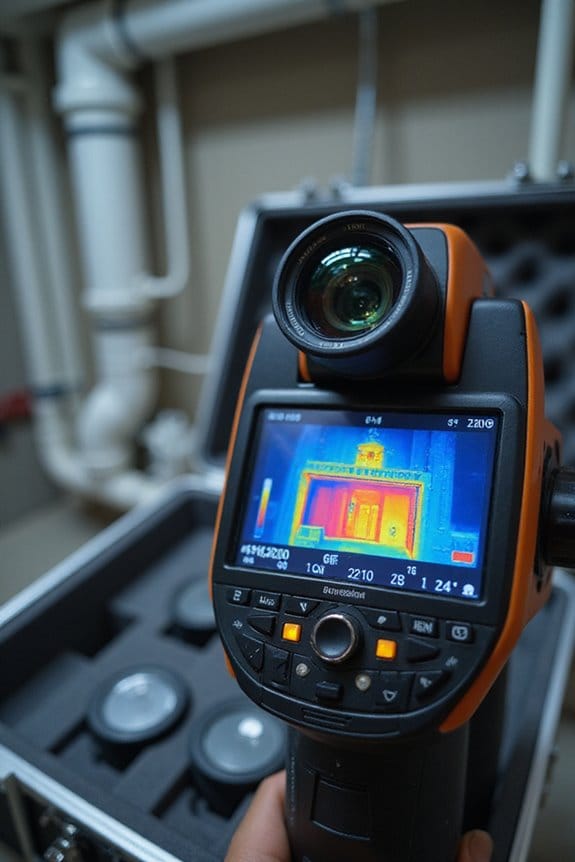
When it comes to thermal testing, the right spectral range can make all the difference in your results. Here are some key applications that showcase this:
- Material-Specific Measurements: Choosing the right spectral range enhances measurement precision, targeting materials with distinct emissivity values for improved spectral accuracy.
- Through Semi-Transparent Media: Selecting spectral ranges allows thermal measurements through materials like glass, maintaining thermal sensitivity and avoiding signal loss.
- Gas Detection: Using the mid-wave infrared (MWIR) range helps identify gas leaks effectively, improving safety in industrial settings.
- Industrial Monitoring: Spectral thermography can detect insulation defects during manufacturing, vital for quality control.
In short, the right spectral range isn’t just a technical detail; it’s essential for getting accurate thermal results!
Recommended Products

【AI Scene Recognition with IntellFault】HF96 features HSFTOOLS' unique IntellFault technology for automated scene detection. Powered by deep learning, it swiftly identifies water leaks and insulation gaps location, making thermal inspections simpler and faster. Download the latest firmware from the HSFTOOLS website to upgrade your device, then select "Scene" in the settings to explore its features. Note: No moisture readings.
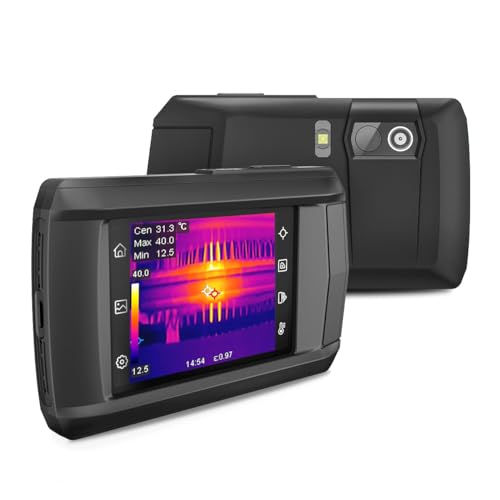
【Intelligent Scene Recognition with IntellFault】Featuring HSFTOOLS' unique IntellFault technology for automated scene detection. Powered by deep learning, it swiftly identifies water leaks and insulation gaps, which makes thermal inspections simpler, faster and more reliable. Download latest firmware on HSFTOOLS Website to upgrade and select "Scene" in the setting to experience it. Note: No moisture readings.

【Thermal Clarity Enhancement】Designed with 2.8-inch 320×240 LCD screen,the HT280 thermal imaging camera shows clearer, detailed thermal images.It enhances thermal image resolution to 260×260 by TISR technology for more details. Thermal sensitivity 50mK and 25Hz frame rate deliver accurate, smooth images, making it a must have perfect tool for building inspection,HVAC troubleshooting, electrical inspection and vehicle maintenance.
Technical Specifications and Sensor Types
Understanding the technical specifications of thermal sensors is essential, especially since the right choice can greatly impact your thermal testing results. Here’s a quick guide to help you:
- Detector Materials: Different materials suit various spectral ranges:
- Si detectors work up to 1 µm.
- PbS and InGaAs are effective from 1-3 µm.
- HgCdTe covers 3-15 µm.
- Short-Wave IR (SWIR): 1-3 µm, overlaps with visible light.
- Mid-Wave IR (MWIR): 3-6 µm, perfect for gas detection.
- Long-Wave IR (LWIR): 6-15 µm, ideal for room temperature objects.
Keep in mind, sensor performance can vary based on these specifications. So, choose wisely!
Recommended Products


Parameters: Power supply: 3-5v. Accuracy is +- 2.5°C (4.5°F). It can detect humans from up to 7 meters (23) feet away. Maximum frame rate is 10Hz. AMG8833 thermal imaging camera sensor temperature measurement range 0°C to 80°C (32°F to 176°F).

High-Accuracy Thermal Sensor – Features a 32x24 IR array with ±2℃ precision, ideal for HVAC systems and fire detection applications.
Differences Between MWIR and LWIR
As you plunge into the differences between MWIR and LWIR, you’ll notice that each has its unique strengths tailored for specific applications. Here’s a quick breakdown:
- MWIR Advantages: It excels in high-resolution imaging, capturing finer details in hotter scenes. If you need precise target identification, MWIR is your go-to.
- LWIR Limitations: While it’s effective for general thermal imaging, LWIR struggles with resolution due to longer wavelengths, leading to fuzzier images.
- Cost and Complexity: MWIR cameras are pricier due to cooled detectors, making them complex. In contrast, LWIR systems are often uncooled, simpler, and more budget-friendly.
Ultimately, your choice depends on whether you prioritize detail or cost. So, what’s your mission? Choose wisely!
Recommended Products

HIGH RESOLUTION: Thermal Imager with over 19,200 pixels enables accurate troubleshooting of hot and cold spots for comprehensive analysis

MODEL TG165-X: 4,800 pixel IR camera measures temperatures from -25°C to 300°C (-13°F to 572°F)
Effects of Atmospheric Conditions on Spectral Range
Choosing between MWIR and LWIR isn’t just about resolution or cost; atmospheric conditions also play a big role in how effectively thermal sensors perform. Here’s what you should know:
- Atmospheric Absorption: Gases like water vapor and carbon dioxide absorb infrared radiation, creating windows around 3-5 µm and 8-14 µm. These are essential for thermal imaging.
- Scattering Effects: Particulates in the air scatter infrared radiation, especially at shorter wavelengths, which can limit detection distance.
- Weather Matters: Rain, fog, or snow increase absorption and scattering, narrowing your effective spectral range.
In clear conditions, thermal imaging shines. So, always check the weather before heading out! It could make all the difference in your thermal testing results.
Future Trends in Thermal Imaging Technology
While it might seem like thermal imaging technology has already reached its peak, there are exciting trends on the horizon that promise to revolutionize the field. Here’s what to look forward to:
- Future Advancements in Resolution: By 2026, thermal cameras will boast resolutions of 640×480 pixels or higher, making images clearer and analyses more accurate.
- Technology Integration with AI: Expect AI to play an essential role in automatic recognition and faster decision-making, especially in public safety.
- Multispectral Imaging: Combining thermal with RGB sensors will enhance our ability to analyze scenes thoroughly.
- Cooled Cameras: With improved sensitivity and reduced noise, cooled thermal cameras will dominate industries like aerospace and research.
- Enhanced Power Efficiency: Innovations in power efficiency will allow thermal cameras to operate longer on a single charge, making them more user-friendly for extended outdoor use.
These trends promise to make thermal imaging more accessible and effective than ever!
Frequently Asked Questions
How Does Spectral Range Affect Thermal Camera Pricing?
I’ve noticed that spectral sensitivity plays a huge role in thermal camera pricing factors. Cameras with specialized ranges often cost more due to advanced technology and materials, while general-purpose models remain more affordable for broader applications.
Can Different Materials Emit in Multiple Spectral Ranges?
Absolutely, I’ve seen different materials emit across multiple spectral ranges. Through spectral analysis, I can pinpoint these emissions, revealing unique thermal characteristics that enhance my understanding of each material’s behavior in various thermal environments.
What Safety Precautions Are Needed When Using Thermal Cameras?
When using thermal cameras, I always prioritize thermal camera safety. I follow infrared imaging precautions, wear appropriate PPE, avoid direct eye exposure to lasers, and guarantee the environment is controlled to maintain accurate readings.
How Does Ambient Temperature Influence Thermal Measurements?
Did you know that temperature variations can cause calibration drift of less than ±1%? I find that ambient influences considerably affect thermal measurements, making accurate adjustments essential for reliable readings in different environments.
Are There Legal Regulations Regarding Thermal Imaging Usage?
Yes, there’re legal implications surrounding thermal imaging usage. I’ve found that various imaging standards exist to regulate its application, particularly regarding privacy rights and ethical considerations, ensuring responsible use across different sectors and jurisdictions.