As an Amazon Associate, we earn from qualifying purchases. Some links may be affiliate links at no extra cost to you. Although our opinions are based on curated research, we haven't used these products. Articles generated with AI.

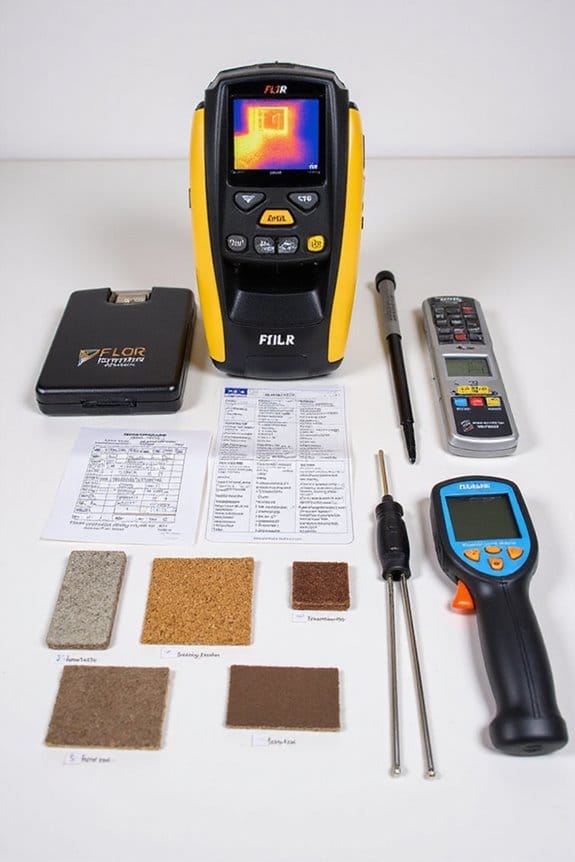
What Is Emissivity In Thermal Readings?

Emissivity is how well a surface emits thermal energy compared to a perfect black body. It ranges from 0 to 1; 0 means a perfect reflector, while 1 means a perfect emitter. This matters in thermal readings because incorrect emissivity values can lead to serious temperature measurement errors. To be precise, think of how shiny materials can mess with those readings. If you stick around, I’ll share more on measuring and using emissivity in real-life applications!
Key Takeaways
- Emissivity measures how effectively a surface emits thermal radiation compared to a perfect black body, ranging from 0 to 1.
- Accurate emissivity values are crucial for precise temperature measurements in thermal imaging and other applications.
- Factors like material type, surface texture, and temperature can significantly affect emissivity readings.
- Emissivity calibration enhances the reliability of thermal data, improving interpretations in various industries.
- Understanding emissivity is essential for heat transfer calculations in systems like HVAC and aerospace.
Definition and Basic Concept of Emissivity
You may be interested
Emissivity is a fascinating concept that plays an essential role in understanding thermal readings. So, what exactly is it? Here’s a quick breakdown:
- Definition: Emissivity measures how well a surface emits thermal energy compared to a perfect black body, which has an emissivity of 1.
- Scale: It ranges from 0 (perfect reflector) to 1 (perfect emitter). Most real-world materials fall somewhere between.
- Thermal Dynamics: All objects above absolute zero emit thermal radiation. The amount depends on their emissivity at a given temperature.
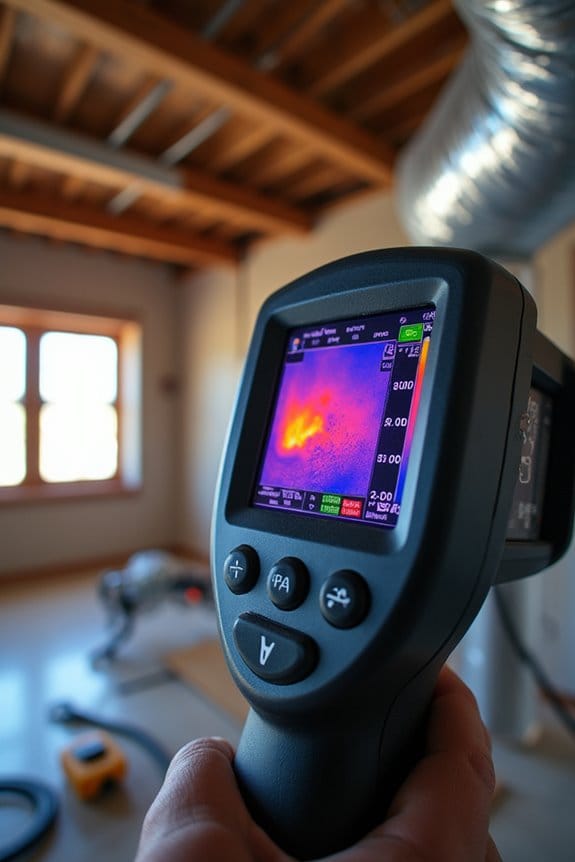
- Application: Knowing emissivity helps refine temperature readings, especially in thermal imaging.
Importance of Emissivity in Thermal Readings
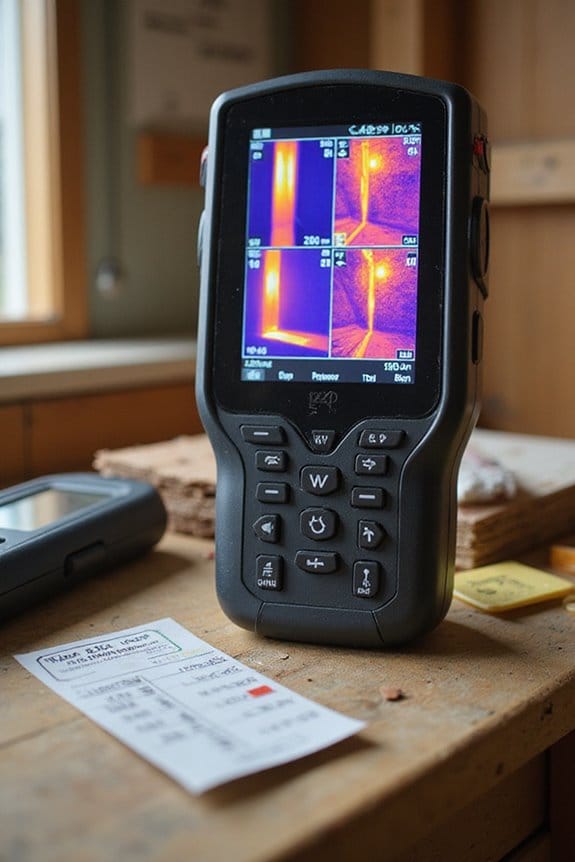
When it comes to thermal readings, the role of emissivity can’t be overstated. Here’s why it’s significant:
- Accurate Measurements: Emissivity directly affects how we measure temperature. Incorrect values can lead to major errors, especially with thermal cameras.
- Heat Transfer: Understanding emissivity helps engineers calculate heat transfer accurately, which is essential in systems like HVAC or aerospace.
- Thermal Imaging: Knowing emissivity improves our interpretation of thermal images, preventing misleading temperature readings.
- Material Identification: Emissivity can reveal surface conditions like contamination or wear, helping maintain material integrity.
- Calibration: Regular emissivity calibration guarantees our tools provide precise data, reducing guesswork and enhancing reliability.
Recommended Products

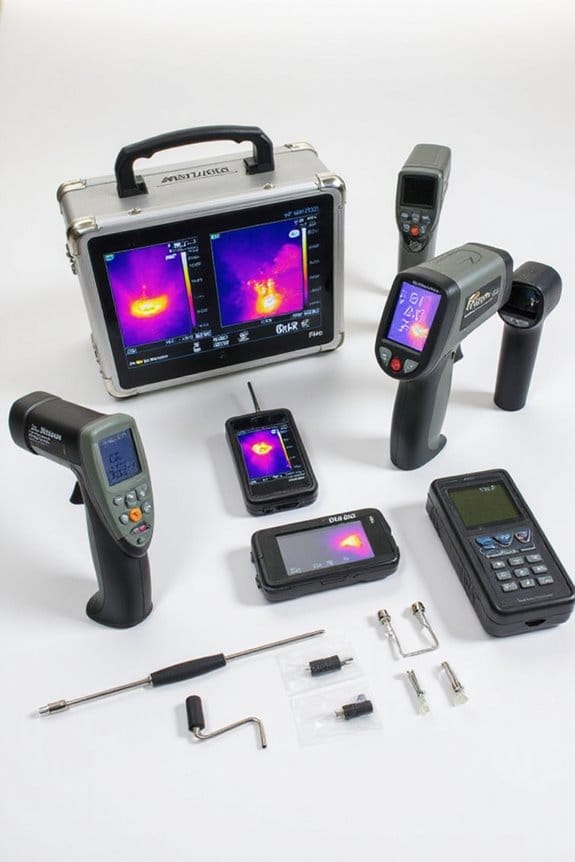
【Enhanced Thermal Clarity】Start with 128x128 thermal imaging and enhance to 240x240 resolution with TISR technology for greater details. The wide 40°x 30° field of view and a 25Hz refresh rate deliver accurate, smooth thermal images—ideal for detailed inspections in homes and on electrical systems and machinery

【Dual Mode Inspection】Combines conventional thermal imaging (Center/Hot/Cold spot modes) with thermometer mode for flexible temperature analysis. Use full-screen thermal imaging to monitor moving animals, machinery, automotive, or HVAC systems in real time, ensuring continuous observation with no detail loss. When you need exact numbers such as kitchen use, thermometer mode provides quick, point-and-shoot readings with a clear digital display.

【AI Scene Recognition with IntellFault】HF96 features HSFTOOLS' unique IntellFault technology for automated scene detection. Powered by deep learning, it swiftly identifies water leaks and insulation gaps location, making thermal inspections simpler and faster. Download the latest firmware from the HSFTOOLS website to upgrade your device, then select "Scene" in the settings to explore its features. Note: No moisture readings.
Factors Affecting Emissivity
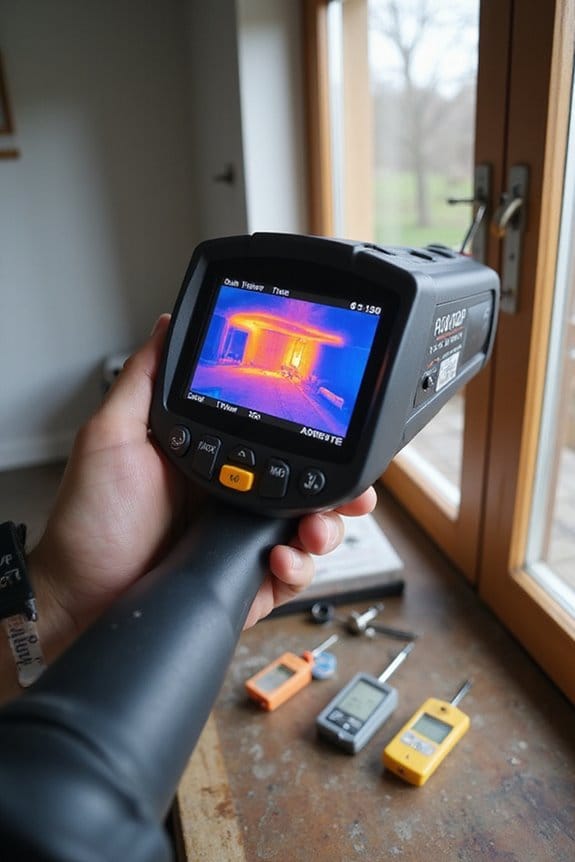
While many might think of emissivity as a simple number, several factors actually influence it in ways that can surprise you. Here are a few key factors:
- Material Types: Metals generally have lower emissivity, while ceramics and non-metals boast higher values.
- Surface Coatings: Coatings can greatly alter emissivity. A shiny surface reflects more heat, while a textured one absorbs it better.
- Temperature Variations: Emissivity can change with temperature. As things heat up, oxidation might occur, impacting the readings.
- Measurement Accuracy: The angle you measure from can affect results. A slight tilt can lead to lower emissivity readings.
Understanding these factors helps improve thermal measurement accuracy. So, keep these in mind next time you’re taking readings!
Recommended Products

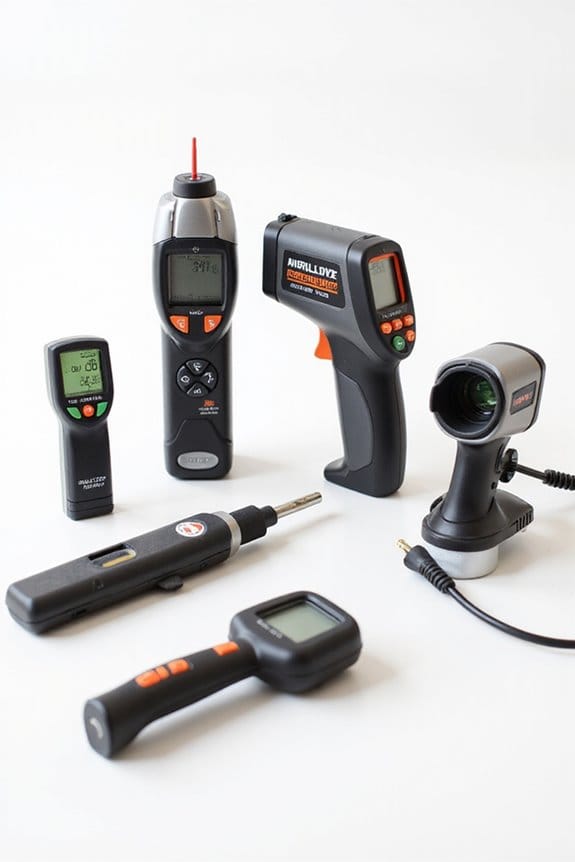
【Highly Accurate & Adjusts to Any Surface】Designed with the latest thermopile sensor technology, the infrared laser thermometer gun is accurate to +/-1.5%; Improve this pizza oven thermometer gun measurements by adjusting the emissivity from 0.1–1.0 to match the surface material being measured

𝐕𝐞𝐫𝐬𝐚𝐭𝐢𝐥𝐞 𝐓𝐨𝐨𝐥𝐬: Infrared technology allows you to measure various objects at home and outdoors; Use it for 𝒎𝒆𝒂𝒕, 𝑫𝑰𝒀 𝒄𝒂𝒏𝒅𝒚, 𝒐𝒗𝒆𝒏𝒔, 𝒈𝒓𝒊𝒍𝒍𝒊𝒏𝒈, 𝒇𝒐𝒐𝒅, 𝒄𝒐𝒐𝒌𝒊𝒏𝒈, 𝒂𝒖𝒕𝒐𝒎𝒐𝒕𝒊𝒗𝒆 𝒖𝒔𝒆, 𝑨/𝑪, 𝒓𝒆𝒇𝒓𝒊𝒈𝒆𝒓𝒂𝒕𝒐𝒓𝒔, etc.

𝐖𝐢𝐝𝐞 𝐓𝐞𝐦𝐩𝐞𝐫𝐚𝐭𝐮𝐫𝐞 𝐑𝐚𝐧𝐠𝐞: Measure a temperature range from -58°–1130°𝙁 / -50°–610°𝘾 𝙖𝙣𝙙 𝙜𝙚𝙩 𝙮𝙤𝙪𝙧 𝙧𝙚𝙨𝙪𝙡𝙩 𝙞𝙣 0.5 𝙨𝙚𝙘𝙤𝙣𝙙𝙨; The display will also show the max temperature of the surface you’re measuring. Perfect heat gun for measuring.
Measurement Techniques of Emissivity
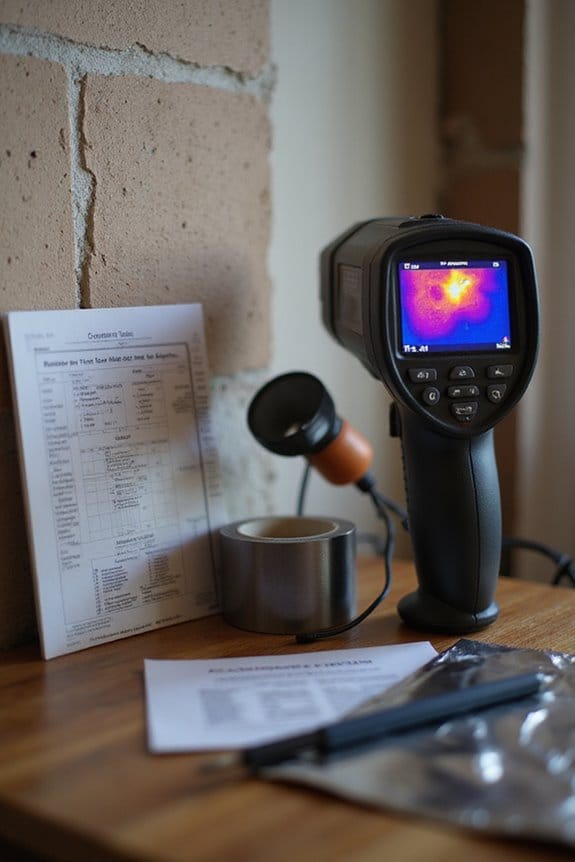
Understanding how to measure emissivity can feel a bit overwhelming, but it’s really just about knowing the right techniques. Here are some popular methods I’ve come across:
- Radiometric Methods: This involves comparing a sample’s emitted radiation to a black body at the same temperature. It’s quite useful for precise readings.
- Calorimetric Techniques: These measure total heat flux and give a thorough emissivity value. While accurate, they can be a bit cumbersome.
- Other Techniques: Devices like FT-IR spectrometers and bolometers can also help, with FT-IR providing spectral data.
In any case, make sure you’ve got controlled environments for accuracy. It may sound like science fiction, but I promise it’s all very doable! Additionally, understanding temperature ranges can enhance your measurements by ensuring that your readings are taken within the optimal limits for accuracy.
Emissivity in Practical Applications
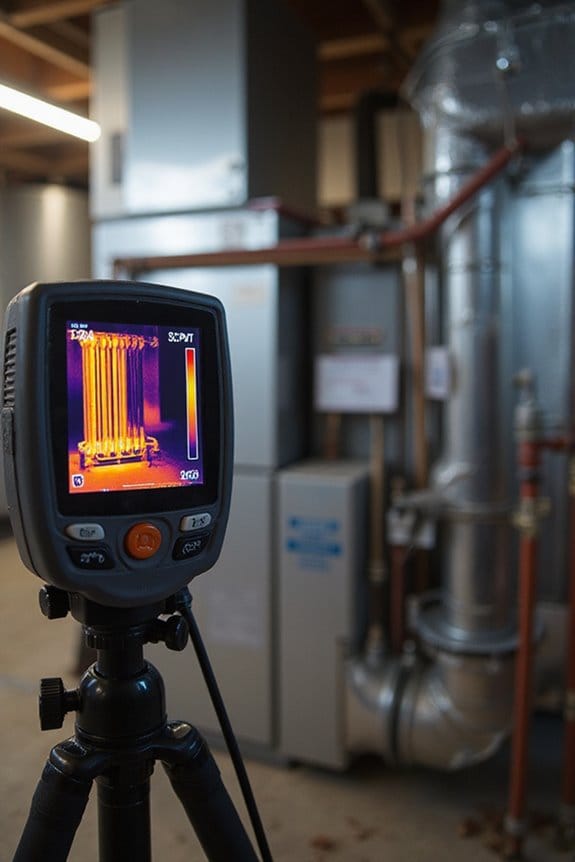
Emissivity plays an important role in various practical applications, especially when it comes to measuring temperature accurately. Here are a few key areas where understanding emissivity is significant:
- Infrared Thermometry: Correct emissivity settings guarantee accurate temperature readings. If you’re measuring polished metals, adjust for low emissivity; otherwise, you might underestimate temperatures.
- Thermal Imaging: Cameras rely on emissivity variations to create accurate temperature maps. High emissivity surfaces shine brighter, indicating higher temperatures, while low emissivity can mislead.
- Industrial Manufacturing: Emissivity calibration is fundamental for processes like metal coiling. Knowing specific emissivity values helps maintain product quality.
Recommended Products

【Ultimate Versatility for Kitchen, Garage & House】Ideal for a multitude of tasks! Check pizza oven or griddle heat for perfect cooking, monitor HVAC system vents, or safely diagnose automotive repair issues like overheating engine parts, all with our infrared thermometer gun

Temperature measurement range:-50℃-500℃ (-58℉-932℉)Display resolution: 0.1 ℃ or 0.1 ℉
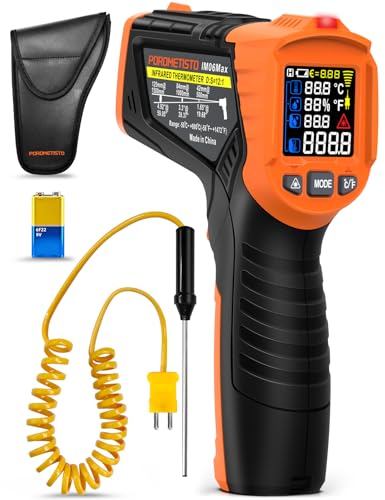
The IM06Max is a industrial infrared thermometer gun that uses both K-type thermocouple contact measurement and non-contact laser measurement.It can accurately measure room temperature, humidity,dew point temperature(condensation temperature,factory temperature),and infrared temperature.The infrared temperature range is -58-1472°F with an accuracy of ±3°C/6°F. The ambient humidity measurement range is 0~100% RH with an accuracy of ±4.0% RH.The K-type thermocouple measurement range is -58-932°F with an accuracy of ±2°C/4°F.
Frequently Asked Questions
How Does Emissivity Differ Between Various Materials?
When I explore emissivity variations, I notice significant differences in material comparisons. Polished metals reflect more, while rough surfaces and non-metallics emit efficiently, impacting thermal readings and measurement accuracy in practical applications.
Can Emissivity Change Over Time or With Usage?
Yes, I’ve noticed emissivity can change over time due to emissivity degradation from surface wear. Regular exposure to elements or mechanical use can alter a surface’s properties, affecting its thermal readings considerably.
What Is the Relationship Between Emissivity and Surface Color?
I’ve noticed that surface color perception greatly affects thermal radiation. Darker surfaces often emit and absorb heat more efficiently, while lighter ones reflect more, leading to lower emissivity. This relationship is essential for accurate thermal measurements.
How Do Environmental Conditions Impact Emissivity Readings?
When I consider how environmental factors impact emissivity readings, I realize temperature fluctuations can markedly alter measurements. High humidity and surface conditions also play vital roles in obtaining accurate thermal data during assessments.
Are There Standard Emissivity Values for Common Materials?
Yes, there are standard emissivity values for common materials. For metals, emissivity ranges from 0.01 to 0.94, while plastic emissivity typically lies between 0.78 and 0.96, depending on the type and surface finish.