As an Amazon Associate, we earn from qualifying purchases. Some links may be affiliate links at no extra cost to you. Although our opinions are based on curated research, we haven't used these products. Articles generated with AI.


How Often Should Fire Extinguishers Be Serviced?

I recommend servicing fire extinguishers regularly to keep them in top shape. Here’s the breakdown: 1) Monthly inspections to check accessibility, pressure, and tags. 2) Annual maintenance by a certified technician for a thorough check. 3) Every six years, perform a complete discharge and replace any worn parts. 4) Hydrostatic testing is essential every 5 or 12 years, depending on the type. Keeping up with these steps guarantees your extinguisher will be ready when you need it most—let’s find out more!
Key Takeaways
- Fire extinguishers should be inspected at least once every 30 days by building owners or trained staff.
- Annual maintenance by a certified technician is required for thorough checks of mechanical parts and integrity.
- Six-year maintenance involves fully discharging the extinguisher and replacing O-rings and valve stems.
- Hydrostatic testing is necessary every 12 years for dry chemical extinguishers and every 5 years for others.
- Documentation of all inspections and maintenance is crucial for OSHA compliance and emergency readiness.
Monthly Fire Extinguisher Inspections
You may be interested

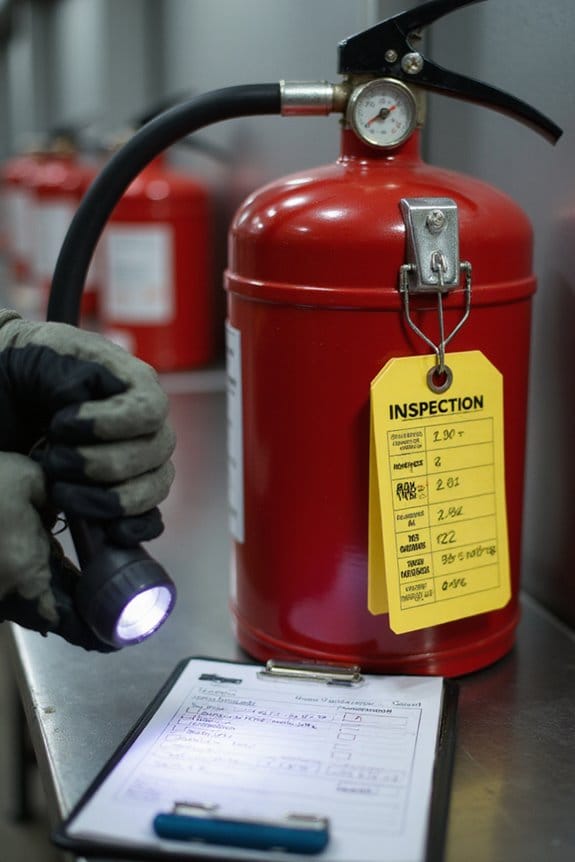
Monthly fire extinguisher inspections are essential, and I’ve found they often get overlooked. Trust me, you don’t want to be the one scrambling when an emergency strikes! Here’s what you need to know about inspection frequency and responsibilities:
- Frequency: Check extinguishers at least once every 30 days.
- Responsibilities: Building owners or trained staff should perform these inspections.
During each check, make sure the extinguisher is accessible, the pressure gauge is green, and there’s no visible damage. If you spot issues, report them immediately—don’t let that expired inspection tag linger!
Annual Fire Extinguisher Maintenance
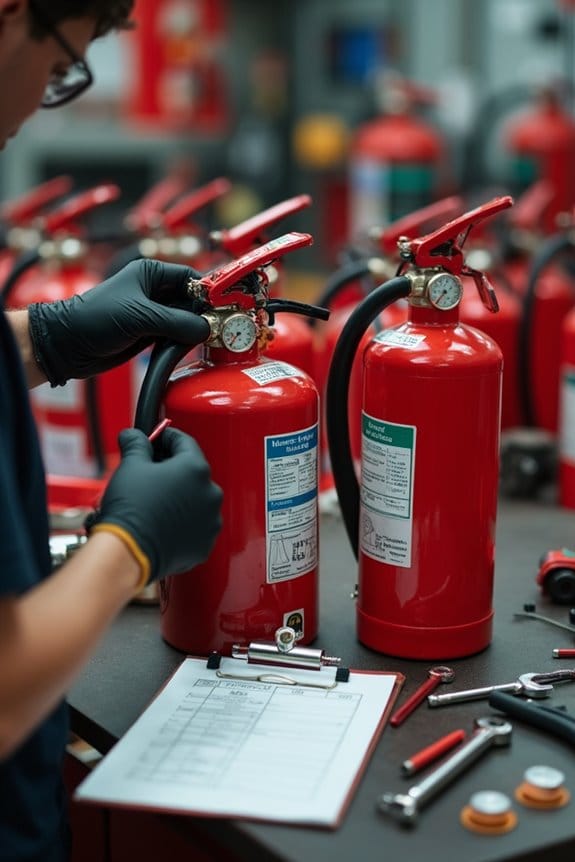
While monthly inspections are a great start, they aren’t enough on their own to keep your fire extinguishers in top shape. That’s where the annual inspection comes in. Here’s what you can expect during this essential maintenance:
- Thorough Examination: A certified technician checks all mechanical parts, ensuring everything functions properly.
- Integrity Check: They’ll verify the expelling means and extinguishing agent are intact.
- Rechargeable Care: If you have a rechargeable extinguisher, new tamper seals will be installed.
- Corrosion and Damage: They’ll inspect for any corrosion or physical damage.
Always follow your maintenance checklist, and remember, keeping records is key for compliance. So, don’t skip this annual service—it could make all the difference in an emergency!
Recommended Products

【Value package】the package includes 160 fire extinguisher tags and 160 pieces of red adjustable zip ties measuring 6 inch in length to hang tags, sufficient quantity for your use and replacement

【Package contents】: the package includes 50 pieces of rectangular fire extinguisher tags, measuring 4.2 x 2.1 inch to record monthly inspections, and 50 pieces of red adjustable zip ties measuring 6 inch in length to hang tags, sufficient quantity for your use and replacement
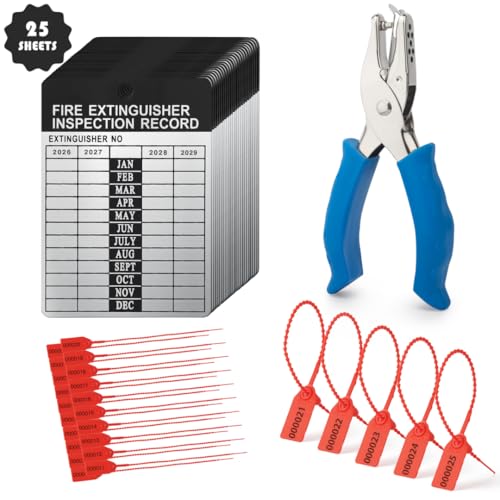
Important Note & Package Contents: The product surface is covered with a protective film. Please remove the film before use to ensure clear writing. Package includes: 25 aluminum fire extinguisher inspection tags, 25 numbered security zip ties, and 1 handheld hole puncher.
Six-Year Fire Extinguisher Maintenance
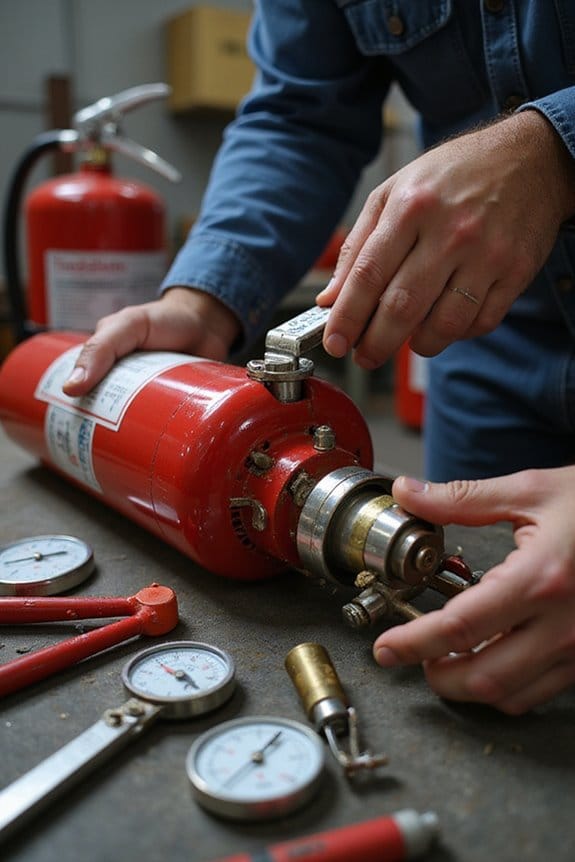
When it comes to fire extinguisher maintenance, you might think annual inspections are enough, but there’s more to it. Enter the six-year servicing! Here’s why it’s essential:
- Thorough Examination: Technicians fully discharge the extinguisher, checking for hidden issues like corrosion or leaks.
- Part Replacements: They replace O-rings and valve stems to keep everything airtight.
- Compliance Verification: After servicing, a compliance sticker is added, proving your extinguisher meets NFPA 10 standards.
Skipping this maintenance can lead to failures in emergencies, which is a risk no one should take. Plus, it extends the life of your extinguisher, saving you money down the line. So, don’t forget that six-year check—it’s important for safety!
Recommended Products
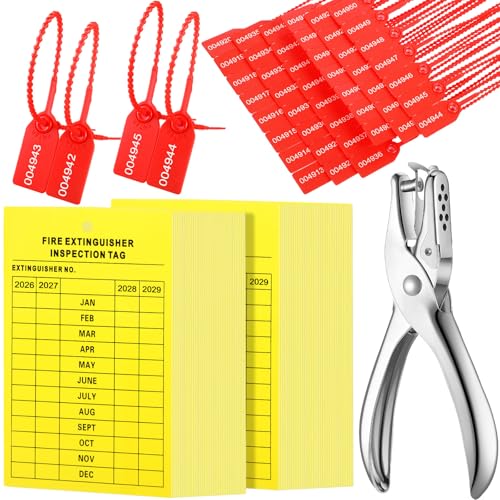
Sufficient Quantity: the package comes with 50 fire extinguisher inspection tags, 50 disposable plastic tamper seals and 1 hole puncher, which is a nice combination to satisfy your needs
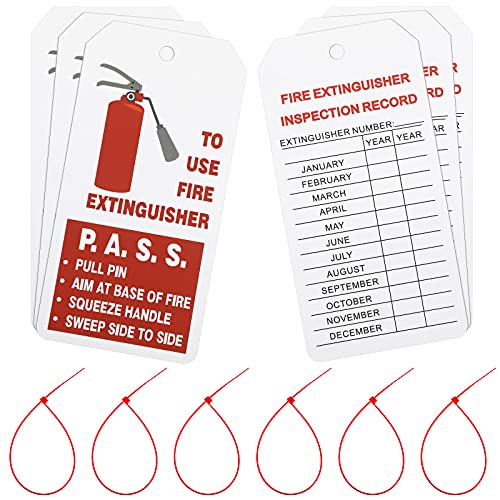
Package contents: the package includes 50 pieces of rectangular fire extinguisher tags, measuring 4.2 x 2.1 inch to record monthly inspections, and 50 pieces of red adjustable zip ties measuring 6 inch in length to hang tags, sufficient quantity for your use and replacement

**AMPLE WRITING SPACE** Extra-large 5.1 x 3 inch size offers generous room for detailed inspection notes, making it easy to write, read, and keep records clear at a glance.
Hydrostatic Testing Requirements
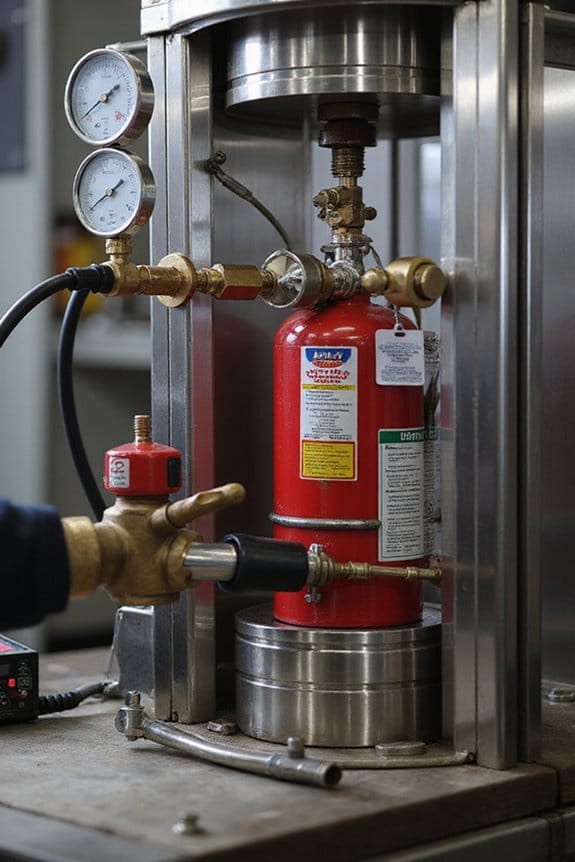
After making certain your fire extinguishers are in good shape with that six-year maintenance check, the next step is hydrostatic testing. This vital process guarantees cylinder integrity and prevents potential disasters. Here’s what you need to know:
- Frequency: Dry chemical extinguishers need testing every 12 years, while wet chemical, pressurized water, and CO2 extinguishers require it every 5 years.
- Procedure: The extinguisher is discharged, pressurized in a water jacket, and held for at least 30 seconds.
- Certification: Always use certified technicians for this testing. It’s not a DIY job!
- Importance: Regular hydrostatic testing helps catch corrosion or damage before it becomes a serious issue—better safe than sorry!
Recommended Products
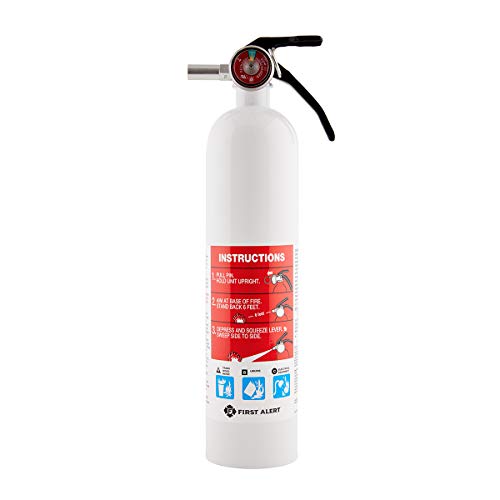
First Alert's Marine1 Fire Extinguisher is UL rated 1-A: 10-B: C; it features durable all-metal construction with a commercial-grade metal valve and trigger
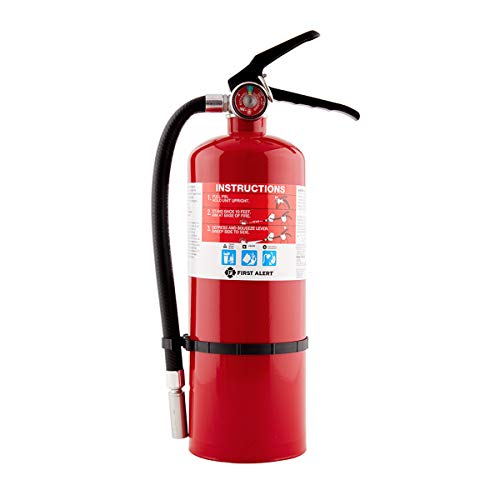
The First Alert HOME2PRO Fire Extinguisher is UL rated 2-A: 10-B:C and meets minimum 2-A: 10-B:C code requirements; It features durable all-metal construction with a commercial-grade metal valve and trigger
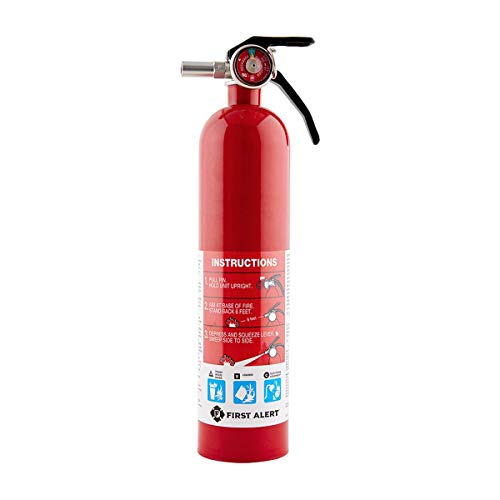
First Alert's HOME1 FE1A10GR Fire Extinguisher is UL rated 1-A: 10-B:C; it features durable all-metal construction with a commercial-grade metal valve and trigger to meet demanding needs
OSHA Compliance and Record Keeping
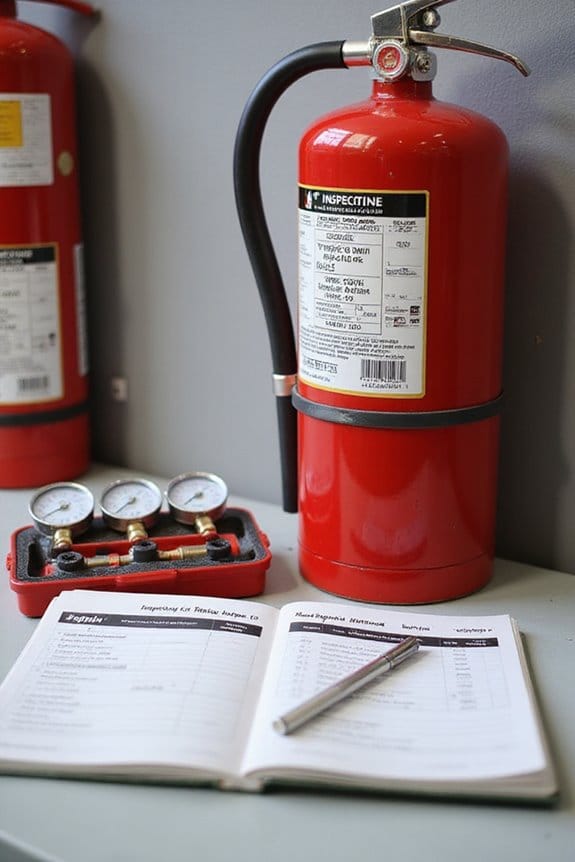
Understanding OSHA compliance and record keeping for fire extinguishers is essential for maintaining a safe workplace. Here’s what you need to know:
- Monthly Inspections: Each month, check for accessibility, correct placement, and the pressure gauge. Document these inspections to stay compliant with OSHA regulations.
- Annual Maintenance: A qualified professional must perform a thorough annual inspection. They’ll check the internal conditions and guarantee everything meets safety standards.
- Record Keeping: Maintain inspection documentation, including dates and findings. This helps during OSHA audits and guarantees your extinguishers are ready in emergencies.
Manufacturer Guidelines for Different Extinguisher Types
To keep our fire extinguishers in top shape, it’s important to know the specific guidelines set by manufacturers for each type. Here’s a quick rundown:
- Stored Pressure Dry Chemical: Service every six years, with hydrostatic testing at 12 years. Check those valves!
- CO2 Extinguishers: Hydrostatic tests every five years. Visual checks monthly. No frequent discharges here!
- Pressurized Water: Similar to CO2, test every five years. Look for corrosion and pressure issues.
- Wet Chemical: Also tested every five years, especially in kitchens. Keep those seals tight!
Recommended Products

Quantity and Size: each pack includes 100 pcs fire extinguisher monthly inspection tags, measuring 2 1/4" x 3", good for labeling standard fire extinguishers, fire hoses, and other equipment that require monthly inspections; Nice size for clear, visible inspection records

Thin and flexible 10-mil poly-based material contains No wood-based, paper content, and is more durable than traditional Cardstock

【All-in-One Inspection Kit, Ready to Use】Includes 50 bright yellow 4.7 × 2.36 in PVC monthly inspection tags, 50 wires, and 1 double-ended oil-based marker. Everything needed to install and record inspection data right away—no extra accessories required. A convenient and cost-effective solution for workplace inspections.
The Importance of Professional Servicing
While it might seem tempting to skip professional servicing for fire extinguishers, doing so can lead to serious consequences. Here’s why you shouldn’t cut corners:
- Functionality: Professionals guarantee your extinguishers are fully charged and ready to go in an emergency. You don’t want to find out they’re not working when it counts!
- Compliance: Regular servicing keeps you in line with fire safety regulations, helping avoid fines and legal headaches.
- Longevity: Routine checks prevent corrosion and extend the lifespan of your extinguishers, saving you money in the long run.
- Peace of Mind: Knowing trained experts have your back makes you feel more secure about your emergency preparedness.
Recommended Products
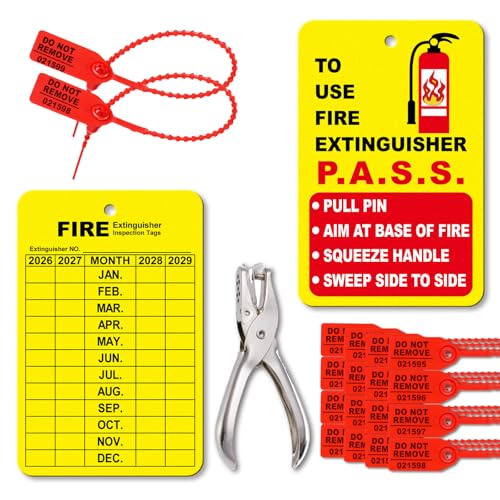
🧯【Value Package】Includes 30 fire extinguisher tags, 30 adjustable numbered tamper-evident cable ties, and 1 specially sized stainless steel handheld hole puncher

LARGE SIZE 4 3/4 x 2 3/8 inch - helps to identify content at a glance; just the right size with ample room to write all the required information for better data keeping and easy reading from any distance.

Complete Package:You will get 50 pieces of 3.4 x 7.3 inch transparent fire extinguisher inspection tag covers 25 pieces of 12 inch galvanized iron wires and 25 pieces of 2.75 x 5.12 inch 200g copperplate paper fire extinguisher tags The transparent PVC material makes the inspection tag clearly visible inside the cover Suitable for both indoor and outdoor use
Frequently Asked Questions
What Are the Signs That a Fire Extinguisher Needs Servicing?
When I check my extinguisher inspection checklist, signs like corrosion, pressure gauge issues, or missing labels indicate servicing needs. I always follow maintenance frequency guidelines to guarantee my extinguisher’s ready for emergencies.
Can I Service Fire Extinguishers Myself?
I can check my fire extinguisher’s visibility, pressure, and seals, but I can’t handle full servicing. For effective fire extinguisher maintenance, I recommend following DIY servicing tips while leaving major tasks to certified professionals.
How Do I Choose the Right Fire Extinguisher Type?
When I’m choosing fire extinguishers, I focus on fire extinguisher classifications. Understanding the specific risks in my environment helps me select the right type, ensuring I’m prepared for any fire situation that may arise.
What Should I Do if My Extinguisher Shows Physical Damage?
When it comes to a damaged fire extinguisher, I’d say it’s better to be safe than sorry. First, I’d conduct a thorough inspection and damage assessment, then report any issues for swift servicing.
Are There Penalties for Not Servicing Fire Extinguishers?
Absolutely, there are penalties for not servicing fire extinguishers. I’ve learned that neglecting extinguisher maintenance guidelines can lead to fines and legal issues due to fire safety regulations. It’s essential to stay compliant for safety.